Where to stay in Marrakech: a neighbourhood guide
Where to stay in Marrakech: Medina riads, Guéliz, Hivernage or Palmeraie. Who each area suits, airport transfers, seasons and booking checks.
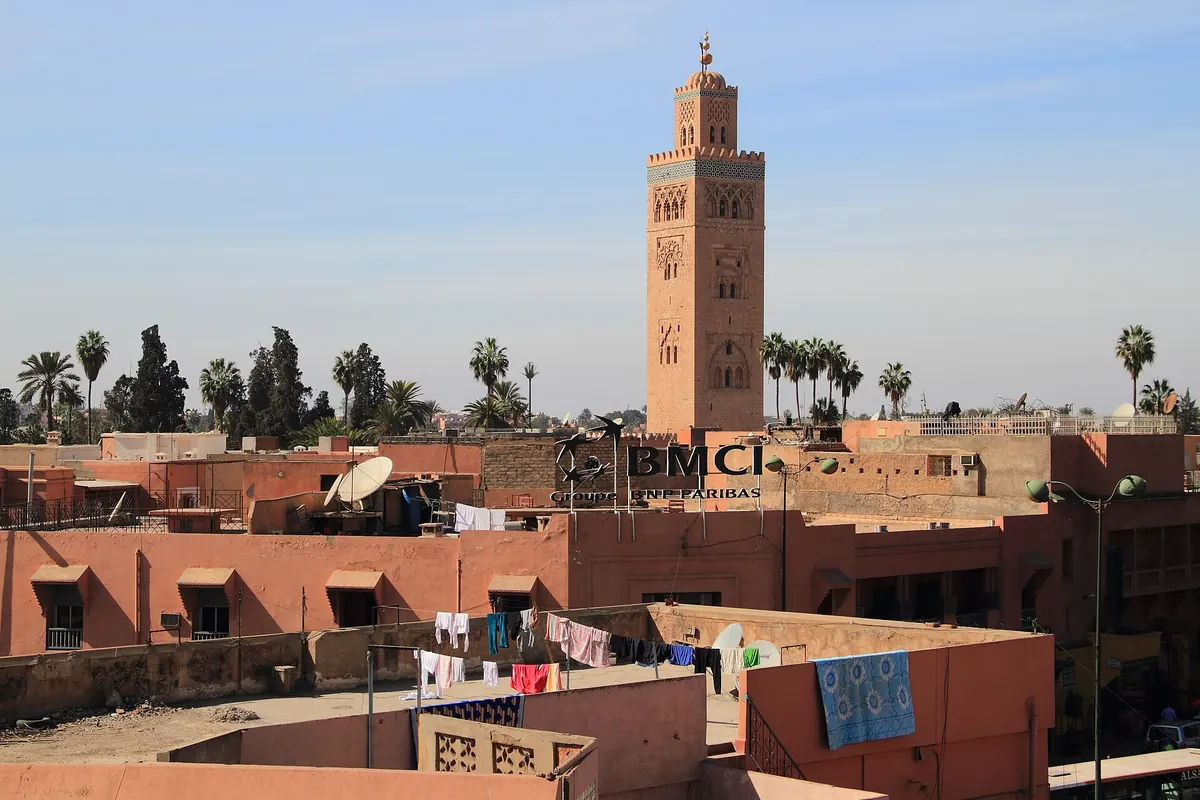 Photo: Schorle, CC BY-SA 4.0
Esta guía todavía no está en español. Te mostramos la versión en inglés.
Choosing where to stay in Marrakech shapes the whole trip. A riad in the Medina puts you a few minutes from the souks but means walking through car-free alleys with your bags. A hotel in Guéliz or Hivernage is easier to reach by taxi but feels more modern. A resort in the Palmeraie is calm but far from the centre. This guide compares the main areas, explains who each one suits, and covers the airport, transport, seasons and the checks worth doing before you book.
Where to stay in Marrakech: the short answer
- Medina: first-timers and couples who want the old city on their doorstep.
- Guéliz: travellers who prefer a modern grid, cafés and simple taxi access.
- Hivernage: hotels with pools and gardens, close to the walls, with nightlife.
- Palmeraie: families and resort stays where quiet matters more than location.
- Agdal and residential areas: budget-minded visitors who want a local feel.
The Medina: riads close to everything
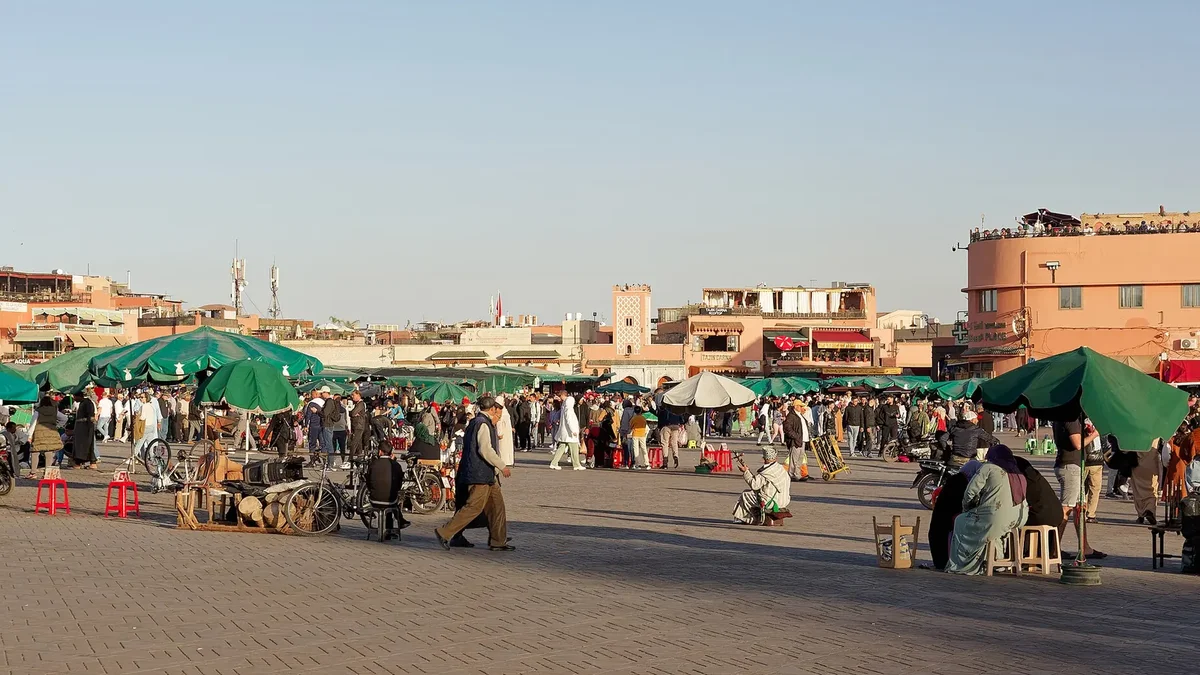
The Medina is the walled historic centre. It holds the souks, the main monuments and most of the city’s riads, which are traditional houses built around an inner courtyard, often with a roof terrace. Jemaa el-Fna, the large central square, sits at its heart. Rough Guides and The Hotel Guru both point first-time visitors here.
The Medina is not one single place. The streets north of the square, including the Mouassine quarter about 500 metres away, are the liveliest and have the highest number of riads. Expect crowds and noise near the square. The southern part, around the Kasbah and the Mellah (the former Jewish quarter), is more residential and calmer, close to the Saadian Tombs and El Badi Palace. From there, the main souks are roughly a 15 to 20 minute walk.
The trade-off is access. The Medina is largely car-free, and its alleys are shared with scooters, carts and pedestrians. Taxis usually stop at the nearest gate, and you walk the last part.
Guéliz: the modern centre
Guéliz, the “new town”, was largely built between the 1910s and the 1930s, with wide boulevards and Art Deco buildings. Today it has galleries, shops and many cafés. It is about a 20 minute walk from Jemaa el-Fna, or 10 to 15 minutes by petit taxi. Hotels here generally offer air conditioning and dependable wifi, which helps if you plan to work during your stay. Some visitors find it less atmospheric than the old city; others value the order and the space.
Hivernage: hotels between the walls and Guéliz
Hivernage lies just outside the Medina walls. It is a district of larger hotels, gardens, restaurants and bars, with the Menara Gardens at its western edge. Jemaa el-Fna is about 15 minutes on foot. Parts of the area are a short walk from the train station. It suits couples and families who want a hotel pool and easy taxi access. Expect evening noise near the nightlife.
Palmeraie: space and quiet, further out
The Palmeraie is a palm grove on the northern edge of the city, now home to resorts, golf courses and private villas. It is very quiet. The trade-off is distance: Jemaa el-Fna is about 20 minutes by car, and each trip into town needs a taxi or a hotel shuttle. Some resorts have children’s clubs, and some are adults-only, so check before booking.
Agdal and other residential areas
Agdal is a residential district with a more local feel and a range of lower-priced hotels and guesthouses. Rough Guides notes it is served by public transport and lies on the way to the Ourika Valley. It is a sensible option if budget matters more than being steps from the souks.
Which area for which traveller
- First-timers: the Medina, ideally within a short walk of a gate, so you can reach the sights on foot and a taxi when needed.
- Couples: a riad in Mouassine or the Kasbah, or a hotel in Hivernage.
- Families: a resort in the Palmeraie or a hotel in Hivernage. In the Medina, the Kasbah and the Mellah are calmer than the streets around the square.
- Long stays and remote work: Guéliz is usually the most practical, with cafés, shops and taxis nearby. Ask any host for a recent wifi speed test before you commit.
Getting from Marrakech Menara Airport
Marrakech Menara Airport sits a few kilometres southwest of the city centre. The Marrakech-Safi Regional Tourism Council lists two main options:
- Bus 19: run by Alsa, it connects the airport with Jemaa el-Fna and the train station. In December 2024 the council listed a departure about every 20 minutes and a fare of 30 dirhams. Pay in cash, and check the time of the last bus if you land late.
- Taxi: taxis wait at the airport at all hours. The same council page listed regulated fares of 70 dirhams by day and 100 dirhams by night to the centre in December 2024. Agree on the fare before you leave.
If you are staying in the Medina, ask your riad which gate is closest, and whether someone can meet you there. Many riads can send directions or a member of staff, and porters with carts often work near the gates.
Getting around the city
Inside the Medina, walking is the only practical way to move. Between districts, yellow petit taxis are the usual choice. They should use the meter, but drivers often refuse or quote a higher price, so insist or agree on the fare first. Alsa city buses cost 4 dirhams, paid on board, so carry small change. For the Palmeraie or day trips, a rental car can make sense.
Best time to visit Marrakech
Marrakech has hot summers and mild winters. Based on long-term averages from WeatherSpark:
- Summer heat: from late June to early September, average highs stay above about 34°C. July is the hottest month, with highs around 37°C.
- Cool season: from mid-November to early March, highs stay below about 22°C. In January, nights fall to around 7°C, so a riad with heating matters.
- Most comfortable periods: mid-March to late June, and mid-September to mid-November.
Rain is more likely between October and April. In summer, a pool or a shaded courtyard makes a real difference.
Booking a riad: practical checks
- Check that it is licensed. Under law 80-14 and its decree 2.23.441, tourist accommodation needs an operating licence before it opens to guests, and home stays and alternative rentals are licensed by local authorities. A new national classification system was published in May 2025. Asking the host about its licence is reasonable.
- Read the cancellation terms. Note the deadline for a free cancellation, any non-refundable deposit, and how refunds are paid.
- Read recent reviews. Focus on the last few months, and look for comments about noise, hot water, heating and how easy the riad was to find.
- Ask about access. Ask for the nearest gate, the walking time from it, and whether stairs or a steep alley are involved.
- Confirm the essentials. Air conditioning in summer, heating in winter, and whether breakfast is included.
What the 2030 World Cup may change
Marrakech is one of the six Moroccan host cities named in the joint 2030 World Cup bid evaluated by FIFA, as Yabiladi reported in August 2024. In September 2026, Morocco World News reported a contract of 1.265 billion dirhams to upgrade the Marrakech Grand Stadium, with lighting, Wi-Fi and security systems, over about 18 months. In March 2025, Atalayar, citing unnamed sources, reported plans for a new airport at Sidi Zouine with a target of 14 million passengers a year; no opening date was given. For visitors, the practical point is simple: during the tournament, expect high demand and book early. See our Morocco 2030 page for the wider picture.
Sources
- Rough Guides – Where to stay in Marrakech (updated 2025)
- The Hotel Guru – Where to stay in Marrakech (2025 edition)
- Anywhere We Roam – Where to stay in Marrakech: best areas and neighbourhoods (updated 18 February 2026)
- Visit Marrakech (Marrakech-Safi Regional Tourism Council) – Transportation (page updated 21 December 2024)
- World Travel Guide – Marrakech Menara Airport
- Lorenzigo – Marrakech airport to city center (updated 27 September 2026)
- Lonely Planet – Getting around Marrakesh (updated 19 November 2025)
- WeatherSpark – Average weather in Marrakesh year-round (climate averages)
- Bladi.net – Morocco regulates Airbnb-type rentals: decree 2.23.441 implementing law 80-14 (13 August 2023, in French)
- DLA Piper – Morocco’s hospitality reform: from ambition to architecture (27 June 2025)
- Yabiladi – FIFA unveils the Morocco–Portugal–Spain 2030 World Cup bid evaluation: stadiums and host cities (1 August 2024)
- Morocco World News – World Cup 2030: Morocco signs MAD 1.26 billion deal to upgrade Marrakech Grand Stadium (22 September 2026)
- Atalayar – Marrakech prepares for the 2030 World Cup with a new international airport (18 March 2025)
Savoir où loger à Marrakech change toute l’expérience du séjour. Un riad dans la médina vous place à quelques minutes des souks, mais il faut parfois finir à pied, valise en main, dans des ruelles fermées aux voitures. Un hôtel à Guéliz ou à l’Hivernage se rejoint facilement en taxi, dans un cadre plus moderne. Un complexe à la Palmeraie offre le calme, loin du centre. Ce guide compare les principaux quartiers, indique à qui chacun convient, puis aborde l’aéroport, les déplacements, les saisons et les vérifications utiles avant de réserver.
Où loger à Marrakech : la réponse courte
- Médina : pour une première visite ou un séjour en couple, avec la vieille ville au pas de la porte.
- Guéliz : pour ceux qui préfèrent un quartier moderne, des cafés et des taxis faciles à trouver.
- Hivernage : des hôtels avec piscine et jardins, près des remparts, avec une vie nocturne.
- Palmeraie : pour les familles et les séjours en complexe, quand le calme compte plus que l’emplacement.
- Agdal et quartiers résidentiels : pour les budgets serrés et une ambiance plus locale.
La médina : des riads au cœur de tout
La médina est le centre historique entouré de remparts. On y trouve les souks, les principaux monuments et la plupart des riads, ces maisons traditionnelles organisées autour d’un patio, souvent avec une terrasse sur le toit. La grande place Jemaa el-Fna en occupe le cœur. Rough Guides comme The Hotel Guru la recommandent en priorité pour un premier séjour.
La médina n’est pas un bloc uniforme. Au nord de la place, y compris le quartier de Mouassine, à environ 500 mètres, l’animation est la plus forte et les riads les plus nombreux. Attendez-vous à du monde et à du bruit près de la place. Le sud, autour de la Kasbah et du Mellah (l’ancien quartier juif), est plus résidentiel et plus paisible, à proximité des tombeaux saadiens et du palais El Badi. Les principaux souks sont alors à 15 ou 20 minutes à pied environ.
La contrepartie, c’est l’accès. La médina est en grande partie interdite aux voitures, et ses ruelles sont partagées entre piétons, scooters et charrettes. Les taxis s’arrêtent en général à la porte la plus proche, et l’on termine à pied.
Guéliz : le centre moderne
Guéliz, la « ville nouvelle », a été construite en grande partie entre les années 1910 et 1930, avec de larges boulevards et des immeubles Art déco. Le quartier compte aujourd’hui des galeries, des boutiques et de nombreux cafés. Jemaa el-Fna est à une vingtaine de minutes à pied, ou à 10 à 15 minutes en petit taxi. Les hôtels y proposent en général la climatisation et un wifi fiable, un atout si vous comptez travailler pendant le séjour. Certains le trouvent moins chargé d’âme que la vieille ville ; d’autres apprécient son ordre et ses espaces.
Hivernage : entre les remparts et Guéliz
L’Hivernage se trouve juste à l’extérieur des remparts de la médina. C’est un quartier de grands hôtels, de jardins, de restaurants et de bars, bordé à l’ouest par les jardins de la Ménara. Jemaa el-Fna est à environ 15 minutes à pied, et une partie du quartier est proche de la gare. Il convient aux couples et aux familles qui veulent une piscine et des taxis à portée de main. Le soir, le bruit peut être présent près des lieux de sortie.
Palmeraie : espace et calme, plus loin du centre
La Palmeraie est une palmeraie située à la lisière nord de la ville. Elle accueille aujourd’hui des complexes hôteliers, des golfs et des villas privées. Le calme y est total. En revanche, Jemaa el-Fna est à une vingtaine de minutes en voiture, et chaque sortie en ville demande un taxi ou une navette de l’hôtel. Certains établissements ont un club pour enfants, d’autres sont réservés aux adultes : vérifiez avant de réserver.
Agdal et les quartiers résidentiels
Agdal est un quartier résidentiel à l’ambiance plus locale, avec un choix d’hôtels et de maisons d’hôtes à prix plus doux. Selon Rough Guides, il est desservi par les transports en commun et se trouve sur la route de la vallée de l’Ourika. Une option raisonnable si le budget compte plus que la proximité immédiate des souks.
Quel quartier pour quel voyageur
- Première visite : la médina, idéalement près d’une porte, pour rejoindre les sites à pied et un taxi si besoin.
- En couple : un riad à Mouassine ou dans la Kasbah, ou un hôtel à l’Hivernage.
- En famille : un complexe à la Palmeraie ou un hôtel à l’Hivernage. Dans la médina, la Kasbah et le Mellah sont plus calmes que les abords de la place.
- Longs séjours et télétravail : Guéliz est souvent le plus pratique, avec cafés, commerces et taxis à proximité. Demandez à l’hôte un test de débit wifi récent avant de vous engager.
Depuis l’aéroport de Marrakech-Ménara
L’aéroport de Marrakech-Ménara se trouve à quelques kilomètres au sud-ouest du centre. Le Conseil régional du tourisme Marrakech-Safi indique deux solutions principales :
- Bus 19 : exploité par Alsa, il relie l’aéroport à Jemaa el-Fna et à la gare. En décembre 2024, le conseil annonçait un départ toutes les 20 minutes environ et un tarif de 30 dirhams. Prévoyez des espèces et vérifiez l’heure du dernier bus si vous arrivez tard.
- Taxi : des taxis attendent à l’aéroport à toute heure. La même page indiquait en décembre 2024 des tarifs réglementés de 70 dirhams le jour et 100 dirhams la nuit jusqu’au centre. Mettez-vous d’accord sur le prix avant de partir.
Si vous logez dans la médina, demandez à votre riad quelle porte est la plus proche et si quelqu’un peut venir vous y chercher. Beaucoup de riads envoient un itinéraire ou un membre du personnel, et des porteurs avec charrette travaillent souvent près des portes.
Se déplacer en ville
Dans la médina, la marche est la seule solution pratique. Entre les quartiers, les petits taxis jaunes sont le choix habituel. Ils devraient utiliser le compteur, mais beaucoup de chauffeurs refusent ou annoncent un prix plus élevé : insistez ou fixez le tarif avant de monter. Les bus urbains Alsa coûtent 4 dirhams, payés à bord, alors gardez de la monnaie. Pour la Palmeraie ou les excursions, une voiture de location peut se justifier.
Quand partir à Marrakech
Marrakech connaît des étés chauds et des hivers doux. D’après les moyennes de long terme de WeatherSpark :
- Chaleur estivale : de fin juin à début septembre, les maximales moyennes dépassent environ 34 °C. Juillet est le mois le plus chaud, autour de 37 °C.
- Saison fraîche : de mi-novembre à début mars, les maximales restent sous 22 °C environ. En janvier, les nuits descendent vers 7 °C : un riad chauffé fait la différence.
- Périodes les plus agréables : de mi-mars à fin juin, puis de mi-septembre à mi-novembre.
Les pluies sont plus probables entre octobre et avril. En été, une piscine ou un patio ombragé compte vraiment.
Réserver un riad : les vérifications utiles
- Vérifier l’autorisation. Selon la loi 80-14 et son décret 2.23.441, un hébergement touristique doit disposer d’une autorisation d’exploitation avant d’accueillir des clients ; pour l’hébergement chez l’habitant et les locations alternatives, elle est délivrée par les autorités locales. Un nouveau système national de classement a été publié en mai 2025. Il est normal de poser la question à l’hôte.
- Lire les conditions d’annulation. Notez la date limite d’annulation gratuite, l’existence d’un acompte non remboursable et le mode de remboursement.
- Lire les avis récents. Concentrez-vous sur les derniers mois, et cherchez les remarques sur le bruit, l’eau chaude, le chauffage et la facilité à trouver le riad.
- Se renseigner sur l’accès. Demandez la porte la plus proche, le temps de marche depuis celle-ci, et s’il y a des escaliers ou une ruelle en pente.
- Confirmer l’essentiel. Climatisation en été, chauffage en hiver, petit-déjeuner inclus ou non.
Ce que la Coupe du monde 2030 pourrait changer
Marrakech figure parmi les six villes hôtes marocaines du dossier commun pour la Coupe du monde 2030 évalué par la FIFA, selon Yabiladi en août 2024. En septembre 2026, Morocco World News a fait état d’un contrat de 1,265 milliard de dirhams pour moderniser le Grand Stade de Marrakech (éclairage, wifi, systèmes de sécurité), sur environ 18 mois. En mars 2025, Atalayar, citant des sources non nommées, évoquait le projet d’un nouvel aéroport à Sidi Zouine, avec un objectif de 14 millions de passagers par an, sans date d’ouverture. Pour les voyageurs, le conseil est simple : pendant le tournoi, la demande sera forte, mieux vaut réserver tôt. Retrouvez le contexte complet sur notre page Maroc 2030.
Sources
- Rough Guides – Where to stay in Marrakech (mis à jour en 2025, en anglais)
- The Hotel Guru – Where to stay in Marrakech (édition 2025, en anglais)
- Anywhere We Roam – Where to stay in Marrakech (mis à jour le 18 février 2026, en anglais)
- Visit Marrakech (Conseil régional du tourisme Marrakech-Safi) – Transport (page mise à jour le 21 décembre 2024)
- World Travel Guide – Aéroport de Marrakech-Ménara (en anglais)
- Lorenzigo – De l’aéroport de Marrakech au centre-ville (mis à jour le 27 septembre 2026, en anglais)
- Lonely Planet – Se déplacer à Marrakech (mis à jour le 19 novembre 2025, en anglais)
- WeatherSpark – Météo moyenne à Marrakech sur l’année (moyennes climatiques, en anglais)
- Bladi.net – Le Maroc met de l’ordre dans les « Airbnb » : décret 2.23.441 d’application de la loi 80-14 (13 août 2023)
- DLA Piper – La réforme marocaine de l’hébergement touristique (27 juin 2025, en anglais)
- Yabiladi – La FIFA dévoile l’évaluation de la candidature Maroc–Portugal–Espagne 2030 : stades et villes (1er août 2024, en anglais)
- Morocco World News – Mondial 2030 : contrat de 1,26 milliard de dirhams pour moderniser le Grand Stade de Marrakech (22 septembre 2026, en anglais)
- Atalayar – Marrakech se prépare au Mondial 2030 avec un nouvel aéroport international (18 mars 2025, en anglais)
اختيار مكان الإقامة في مراكش يحدد طابع الرحلة كلها. فالرياض في المدينة القديمة يضعك على بعد دقائق من الأسواق، لكنه قد يتطلب السير بالأمتعة في أزقة لا تدخلها السيارات. أما الفندق في جليز أو الحي الشتوي (الهيفرناج) فيسهل الوصول إليه بسيارة الأجرة، في أجواء أكثر حداثة. والمنتجع في النخيل يمنحك الهدوء، لكنه بعيد عن المركز. يقارن هذا الدليل بين أهم الأحياء، ويوضح لمن يناسب كل منها، ثم يتناول المطار والتنقل والمواسم وما ينبغي التحقق منه قبل الحجز.
أين تقيم في مراكش؟ الجواب المختصر
- المدينة القديمة: للزيارة الأولى وللأزواج، حيث المعالم على بعد خطوات.
- جليز: لمن يفضل حيًا عصريًا فيه مقاهٍ وسيارات أجرة متوفرة.
- الحي الشتوي: فنادق بمسابح وحدائق قرب الأسوار، مع حياة ليلية.
- النخيل: للعائلات وإقامات المنتجعات، حين يكون الهدوء أهم من القرب.
- أكدال والأحياء السكنية: لمن يراعي الميزانية ويبحث عن أجواء محلية.
المدينة القديمة: رياضات في قلب كل شيء
المدينة القديمة هي المركز التاريخي المحاط بالأسوار. فيها الأسواق وأبرز المعالم ومعظم رياضات المدينة، وهي بيوت تقليدية مبنية حول فناء داخلي، وغالبًا ما تعلوها شرفة على السطح. وتتوسطها ساحة جامع الفنا الشهيرة. ويوصي كل من Rough Guides وThe Hotel Guru بها أولًا لمن يزور مراكش لأول مرة.
غير أن المدينة القديمة ليست كتلة واحدة. فالأزقة الواقعة شمال الساحة، ومنها حي المواسين على بعد نحو 500 متر، هي الأكثر حيوية وتضم أكبر عدد من الرياضات، مع ازدحام وضجيج قرب الساحة. أما الجزء الجنوبي، حول القصبة والملاح (الحي اليهودي القديم)، فطابعه سكني وأهدأ، وهو قريب من قبور السعديين وقصر البديع، وتبعد عنه الأسواق الرئيسية نحو 15 إلى 20 دقيقة سيرًا.
والثمن هنا هو صعوبة الوصول. فمعظم المدينة القديمة مغلق أمام السيارات، وأزقتها مشتركة بين المارة والدراجات النارية والعربات. وعادة ما تتوقف سيارات الأجرة عند أقرب باب، ثم تكمل الطريق مشيًا.
جليز: المركز العصري
شُيّد حي جليز، أو «المدينة الجديدة»، في معظمه بين العقدين الثاني والرابع من القرن العشرين، بشوارع واسعة ومبانٍ على طراز «آرت ديكو». ويضم اليوم أروقة فنية ومتاجر ومقاهي كثيرة. وتبعد ساحة جامع الفنا نحو 20 دقيقة سيرًا، أو 10 إلى 15 دقيقة بسيارة الأجرة الصغيرة. وتوفر فنادقه عمومًا التكييف واتصالًا موثوقًا بالإنترنت، وهي ميزة لمن ينوي العمل خلال إقامته. يراه البعض أقل روحًا من المدينة القديمة، بينما يقدّر آخرون نظامه واتساعه.
الحي الشتوي: بين الأسوار وجليز
يقع الحي الشتوي خارج أسوار المدينة القديمة مباشرة، وهو حي فنادق كبيرة وحدائق ومطاعم وحانات، تحده من الغرب حدائق المنارة. وتبعد ساحة جامع الفنا عنه نحو 15 دقيقة مشيًا، كما أن أجزاء منه قريبة من محطة القطار. يناسب الأزواج والعائلات الذين يريدون مسبحًا في الفندق وسهولة في إيجاد سيارة أجرة. وقد يكون الضجيج حاضرًا مساءً قرب أماكن السهر.
النخيل: مساحة وهدوء بعيدًا عن المركز
النخيل واحة نخيل على الطرف الشمالي للمدينة، تحولت إلى منطقة منتجعات وملاعب غولف وفيلات خاصة. الهدوء فيها تام، لكن المسافة هي الثمن: فساحة جامع الفنا على بعد نحو 20 دقيقة بالسيارة، وكل خروج إلى المدينة يحتاج إلى سيارة أجرة أو حافلة الفندق. بعض المنتجعات فيها نوادٍ للأطفال، وبعضها مخصص للبالغين فقط، لذا تحقق قبل الحجز.
أكدال والأحياء السكنية
أكدال حي سكني ذو طابع محلي أكثر، وفيه فنادق ودور ضيافة بأسعار أخف. وبحسب Rough Guides، تخدمه وسائل النقل العمومي ويقع على طريق وادي أوريكا. وهو خيار معقول إذا كانت الميزانية أهم من القرب المباشر من الأسواق.
أي حي يناسب أي مسافر؟
- الزيارة الأولى: المدينة القديمة، ويُفضّل أن تكون قرب أحد الأبواب، لتصل إلى المعالم مشيًا وإلى سيارة أجرة عند الحاجة.
- الأزواج: رياض في المواسين أو القصبة، أو فندق في الحي الشتوي.
- العائلات: منتجع في النخيل أو فندق في الحي الشتوي. وداخل المدينة القديمة، تبقى القصبة والملاح أهدأ من محيط الساحة.
- الإقامات الطويلة والعمل عن بعد: جليز غالبًا هو الأكثر عملية، مع المقاهي والمتاجر وسيارات الأجرة القريبة. اطلب من المضيف نتيجة اختبار حديث لسرعة الإنترنت قبل الالتزام.
الوصول من مطار مراكش المنارة
يقع مطار مراكش المنارة على بعد بضعة كيلومترات جنوب غرب وسط المدينة. ويذكر المجلس الجهوي للسياحة مراكش آسفي خيارين رئيسيين:
- الحافلة رقم 19: تشغلها شركة ألزا، وتربط المطار بساحة جامع الفنا ومحطة القطار. وفي دجنبر 2024، أشار المجلس إلى انطلاق حافلة كل 20 دقيقة تقريبًا بتعريفة 30 درهمًا. احمل نقودًا، وتحقق من موعد آخر حافلة إن كان وصولك متأخرًا.
- سيارة الأجرة: تتوفر سيارات الأجرة في المطار في كل الأوقات. وذكرت الصفحة نفسها في دجنبر 2024 تعريفة منظمة قدرها 70 درهمًا نهارًا و100 درهم ليلًا حتى وسط المدينة. اتفق على الثمن قبل الانطلاق.
إن كنت ستقيم في المدينة القديمة، فاسأل الرياض عن أقرب باب إليه، وهل يمكن أن يستقبلك أحد هناك. كثير من الرياضات يرسل وصفًا للطريق أو أحد العاملين، كما يعمل حمّالون بعربات يدوية قرب الأبواب في الغالب.
التنقل داخل المدينة
داخل المدينة القديمة، المشي هو الوسيلة العملية الوحيدة. وبين الأحياء، تبقى سيارات الأجرة الصغيرة الصفراء الخيار المعتاد. يُفترض أن تعمل بالعداد، لكن كثيرًا من السائقين يرفضون تشغيله أو يطلبون ثمنًا أعلى، فأصرّ على العداد أو اتفق على الثمن مسبقًا. وتكلف حافلات ألزا الحضرية 4 دراهم تُدفع داخل الحافلة، فاحتفظ بقطع نقدية صغيرة. أما للتنقل إلى النخيل أو للرحلات خارج المدينة، فقد يكون كراء سيارة خيارًا مناسبًا.
أفضل وقت لزيارة مراكش
تعرف مراكش صيفًا حارًا وشتاءً معتدلًا. واستنادًا إلى المعدلات طويلة المدى لموقع WeatherSpark:
- حرارة الصيف: من أواخر يونيو إلى أوائل شتنبر، يتجاوز متوسط الحرارة القصوى نحو 34 درجة مئوية. ويوليوز هو أشد الشهور حرارة، بقصوى تقارب 37 درجة.
- الفصل البارد: من منتصف نونبر إلى أوائل مارس، تبقى القصوى دون 22 درجة تقريبًا. وفي يناير تنخفض الحرارة ليلًا إلى نحو 7 درجات، لذا فالتدفئة في الرياض مهمة.
- أنسب الفترات: من منتصف مارس إلى أواخر يونيو، ومن منتصف شتنبر إلى منتصف نونبر.
تكون الأمطار أكثر احتمالًا بين أكتوبر وأبريل. وفي الصيف، يصنع المسبح أو الفناء الظليل فرقًا حقيقيًا.
حجز رياض: ما ينبغي التحقق منه
- الترخيص. بموجب القانون 80-14 ومرسومه التطبيقي 2.23.441، يحتاج أي إيواء سياحي إلى رخصة استغلال قبل استقبال الزبائن، وتمنح السلطات المحلية هذه الرخصة للإيواء لدى الساكنة وأشكال الإيواء البديلة. كما نُشر نظام وطني جديد للتصنيف في ماي 2025. ومن الطبيعي أن تسأل المضيف عن ترخيصه.
- شروط الإلغاء. انتبه إلى آخر أجل للإلغاء المجاني، ووجود عربون غير قابل للاسترجاع، وطريقة إرجاع المبلغ.
- التقييمات الحديثة. ركّز على الأشهر الأخيرة، وابحث عن الملاحظات المتعلقة بالضجيج والماء الساخن والتدفئة وسهولة العثور على الرياض.
- طريقة الوصول. اسأل عن أقرب باب، ومدة المشي منه، وهل توجد أدراج أو زقاق منحدر.
- الأساسيات. التكييف صيفًا، والتدفئة شتاءً، وهل الفطور مشمول في الثمن.
ما الذي قد يغيره مونديال 2030؟
مراكش واحدة من ست مدن مغربية مستضيفة وردت في الملف المشترك لكأس العالم 2030 الذي قيّمه الاتحاد الدولي لكرة القدم، حسب ما نقله موقع يابلادي في غشت 2024. وفي شتنبر 2026، أفاد موقع Morocco World News بإبرام صفقة بقيمة 1.265 مليار درهم لتأهيل الملعب الكبير بمراكش، تشمل الإنارة والإنترنت اللاسلكي وأنظمة الأمن، على مدى نحو 18 شهرًا. وفي مارس 2025، تحدث موقع Atalayar، نقلًا عن مصادر لم يسمّها، عن مشروع مطار جديد في سيدي الزوين بطاقة مستهدفة تبلغ 14 مليون مسافر سنويًا، دون تحديد موعد لافتتاحه. والنصيحة العملية للزوار واضحة: الطلب سيكون مرتفعًا خلال البطولة، فالأفضل الحجز مبكرًا. تعرّف على الصورة الكاملة في صفحة المغرب 2030.
المصادر
- Rough Guides – أين تقيم في مراكش (محدّث سنة 2025، بالإنجليزية)
- The Hotel Guru – أين تقيم في مراكش (نسخة 2025، بالإنجليزية)
- Anywhere We Roam – أين تقيم في مراكش: أفضل الأحياء (محدّث في 18 فبراير 2026، بالإنجليزية)
- Visit Marrakech (المجلس الجهوي للسياحة مراكش آسفي) – التنقل (صفحة محدّثة في 21 دجنبر 2024)
- World Travel Guide – مطار مراكش المنارة (بالإنجليزية)
- Lorenzigo – من مطار مراكش إلى وسط المدينة (محدّث في 27 شتنبر 2026، بالإنجليزية)
- Lonely Planet – التنقل في مراكش (محدّث في 19 نونبر 2025، بالإنجليزية)
- WeatherSpark – متوسط الطقس في مراكش على مدار السنة (معدلات مناخية، بالإنجليزية)
- Bladi.net – المغرب ينظم كراء «Airbnb»: المرسوم 2.23.441 لتطبيق القانون 80-14 (13 غشت 2023، بالفرنسية)
- DLA Piper – إصلاح قطاع الإيواء السياحي في المغرب (27 يونيو 2025، بالإنجليزية)
- Yabiladi – FIFA تكشف تقييم ملف المغرب والبرتغال وإسبانيا 2030: الملاعب والمدن (فاتح غشت 2024، بالإنجليزية)
- Morocco World News – مونديال 2030: صفقة بقيمة 1.26 مليار درهم لتأهيل الملعب الكبير بمراكش (22 شتنبر 2026، بالإنجليزية)
- Atalayar – مراكش تستعد لمونديال 2030 بمطار دولي جديد (18 مارس 2025، بالإنجليزية)
Sahla Trip guide, written from the public sources listed above and checked on the date shown. It contains affiliate links, grouped in the “Plan your trip” box: the partner may pay us a commission, at no extra cost to you.